
Blog · Sourcing
Importing aluminum from Asia or buying from a Mexican mill in 2026

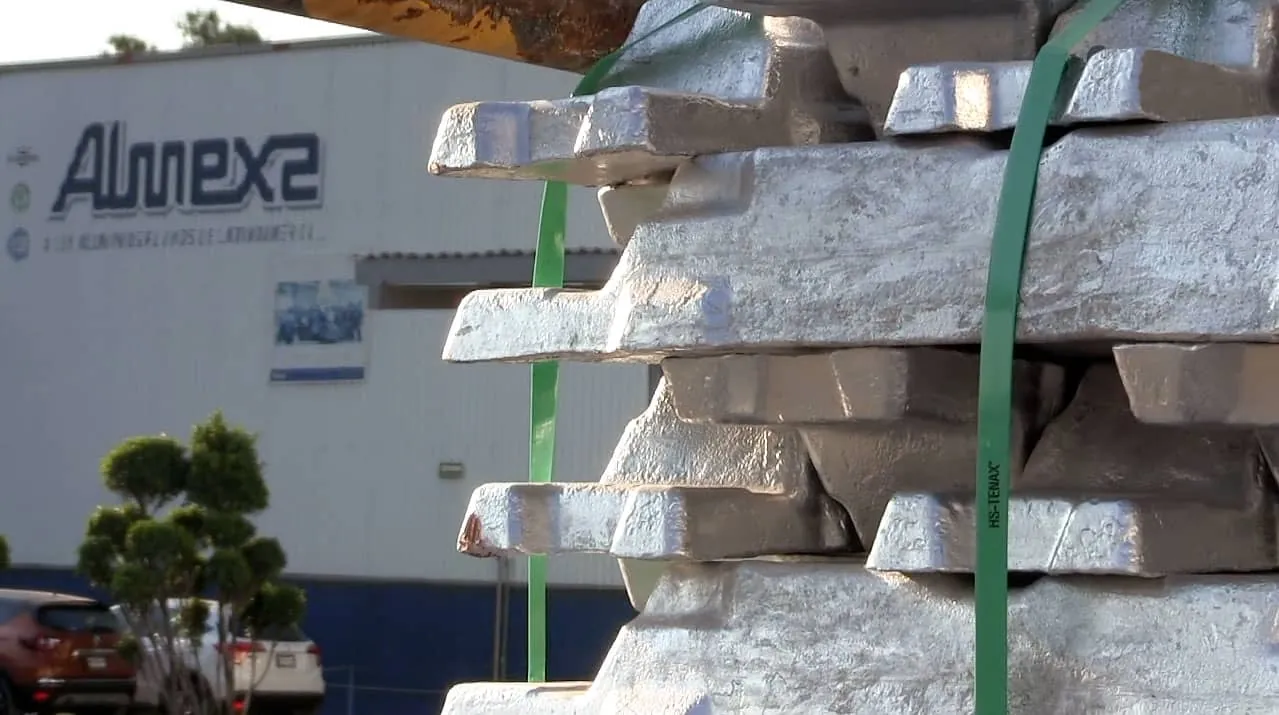
The United States applies Section 232 tariffs of up to 50% on aluminum and requires importers to declare the country of smelt and cast; since January 1, 2026 Mexico applies 5% to 50% tariffs on 1,463 tariff lines from non-treaty countries. An Asian FOB price leaves out freight, tariffs, customs, a 30% deposit and two to three months of transit. Buying from a Mexican mill gives USMCA-originating material with documented origin and delivery by truck; importing still makes sense for alloys or widths the mill does not make. Sources: Why Loyalty, 2026 tariff guide; Metalmecánica; Clúster Industrial with INEGI data, September 17, 2026.
This is not a guide telling you not to import. It is a guide so you compare with every cost on the table, which is what a purchasing director does before signing.
What changed for North American buyers
Three facts, with sources:
- The United States applies the Section 232 tariff of up to 50% on aluminum, even under USMCA, and requires the importer to declare where the metal was smelted and cast (Why Loyalty; Metalmecánica, 2026).
- Mexico applies since January 1, 2026 a 5% to 50% tariff package on 1,463 tariff lines from countries without a trade agreement, including aluminum products (Why Loyalty, 2026 tariff guide).
- Mexico imported US$10,571 million in aluminum and manufactures in 2025 and exported US$2,709 million: the domestic mill has room to supply the region (Clúster Industrial with INEGI data, September 17, 2026).
A North American buyer has, for the first time in years, an economic reason, not a patriotic one, to look for a supplier with documented regional origin.
What an FOB price leaves out
| Item | FOB Asia import | Mill in Mexico |
|---|---|---|
| Factory price | Yes | Yes (LME + premium + FAB) |
| Ocean freight and insurance | Not included | Not applicable |
| Section 232 or import tariff | Not included, origin-dependent | USMCA-region material, documented |
| Customs broker and handling | Not included | Land crossing with USMCA paperwork |
| Inland freight | Not included | Quoted or included |
| Deposit | Typical 30% on order | Per terms |
| Inventory in transit | 2 to 3 months | Days |
| Origin documentation | Assembled by the importer | Provided by the mill |
When a buyer adds it all up, the 25% gap seen at factory price shrinks. In some products it disappears; in others a real gap remains, and then the decision is about time, risk and origin.
When importing still makes sense
Let's be clear: there are things a common-alloy mill does not make. Heat-treatable alloys (6061, 6063), can body stock, 48 in widths in the 5000 series that Almexa today makes only up to 36 in. If your spec is there, importing is the option, and a good supplier tells you so. What makes no sense is importing what is made a truck ride away, out of habit.
The risk that doesn't show on the quote
A defective lot from Asia is resolved in months: claim, inspection, replacement on the next ship. A defective lot from a North American mill is resolved with a visit. In automotive and pharmaceutical, where a stopped line costs more than the material, that risk is worth more than the price differential.
How to decide in an afternoon
- Ask the importer for delivered price at your plant, with tariffs and freight, and a delivery date.
- Ask the Mexican mill for the same, broken down into LME, premium and FAB.
- Add the financial cost of the deposit and inventory in transit to the import price.
- Ask both who answers for a defective lot and in how many days.
- Check what origin documentation each provides if your customer needs USMCA content.
With that table, the decision stops being an argument and becomes a subtraction.
Frequently asked questions
What tariff does aluminum from China pay entering the United States in 2026?
The Section 232 tariff on aluminum applies at up to 50% depending on origin and product, and the importer must declare the country of smelt and cast. The exact rate for your product is determined by your customs broker.
Is it worth importing aluminum from Asia in 2026?
It depends on the product. For alloys or widths not made in North America it may be; for coil, sheet, circles, fin stock and foil in common alloys, a Mexican mill avoids ocean freight, tariffs, deposits and two to three months of transit, and delivers documented USMCA origin.
What is Section 232?
A provision of US trade law allowing tariffs on national security grounds. It applies to aluminum at rates up to 50% and requires declaring the country of smelt and cast of the metal.

Leads Almexa Aluminio, Mexico's integrated flat-rolled aluminum mill. Writes about alloys, process, pricing and supply for industrial buyers in North America. LinkedIn