
Blog · Trade compliance
How to document the country of smelt and cast of aluminum for US customs

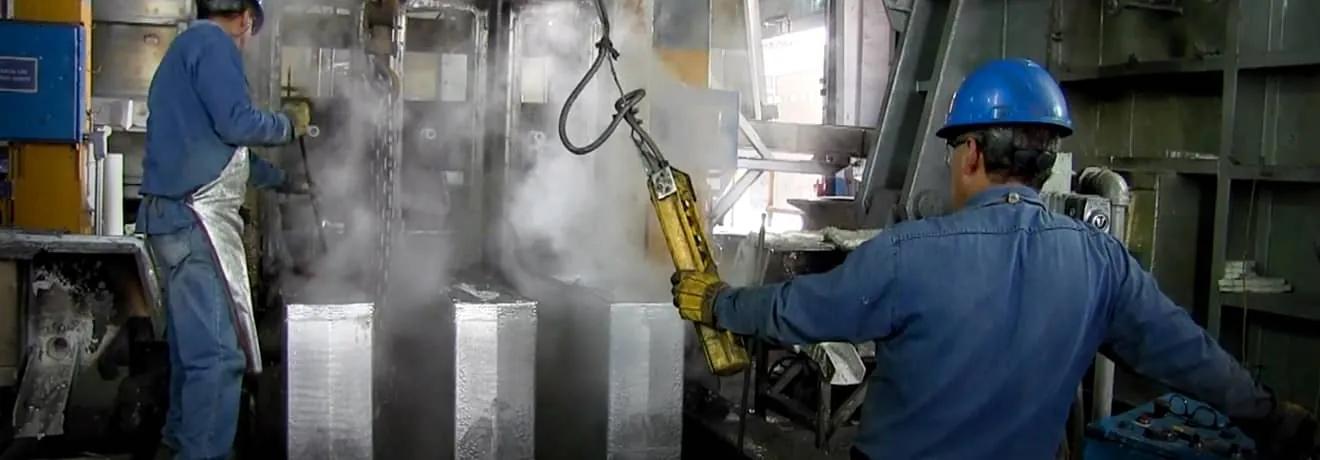
Under Section 232, the United States requires importers to declare the country where the aluminum in each product was smelted and cast; USMCA requires regional content for a part to enter duty-free. The evidence comes from the mill: a mill test report per lot and a plant statement that the metal was smelted and cast at its plant. Almexa melts, casts and rolls in Mexico and provides that documentation with every order. The certificate of origin of the finished product is issued by the exporter with its trade compliance team. Source: Why Loyalty, 2026 tariff guide; Almexa practice, 2026.
Until recently, aluminum origin was a box on the entry summary. Today it is a question a US customer asks before approving a supplier, and one an exporter must answer with documents.
What the United States asks
The Section 232 tariff applies to aluminum and derivative products according to their origin. To apply it, US customs requires the importer to declare the country of primary smelt, the country of secondary smelt if any, and the country of most recent cast. A product without that information is treated as if it came from the most heavily tariffed origin. That is why automakers and their tier-one suppliers ask the whole chain to document the metal.
What USMCA asks
For a part to cross duty-free under the agreement, it must meet its tariff line's rule of origin: usually a tariff shift and a regional value content percentage. Aluminum melted and rolled in Mexico counts as originating material; aluminum imported from outside the region does not. The more Mexican metal a part carries, the more easily it meets regional content.
What a mill provides
| Document | What it proves | Who issues it |
|---|---|---|
| Lot mill test report | Alloy, chemistry, mechanical properties, temper | Mill quality control |
| Plant statement | That the lot was smelted, cast and rolled at a specific plant in Mexico | The mill |
| Lot traceability | The path from casting to the delivered coil or circle | The mill |
| System certificates | IATF 16949, ISO 9001, FSSC 22000 with scope and validity | Certification bodies |
Almexa provides all four. What it does not issue is the certificate of origin of the customer's finished product, because that depends on everything the customer added to the metal.
What the exporter or importer must assemble
- The material evidence: the mill's documents, per lot.
- The regional value content worksheet for the part, with the trade compliance team.
- The smelt and cast declaration for the US importer.
- A file per shipment, because customs can ask for it years later.
What to ask a distributor
If you buy from a service center or an importer, ask which mill the coil came from and request the original mill test report. If the answer is "we don't know" or "it's mixed", your US customer won't know either, and the part will pay the highest tariff.
What Almexa can and cannot state
It can state where its product was smelted, cast and rolled: at its plants in Cuautitlán Izcalli, Ecatepec and Veracruz, Mexico. It cannot state how your finished product classifies or what tariff it will pay: that is determined by your customs broker with the applicable tariff line and rule of origin.
Frequently asked questions
What is the country of smelt and cast of aluminum?
The country where the aluminum was first smelted (primary smelt) and the country where it was last cast into slab or strip before rolling. The United States requires both to be declared to apply Section 232.
Is Almexa aluminum USMCA-originating?
The metal is melted, cast and rolled in Mexico, so it qualifies as originating material of the region. Your finished part's qualification depends on its rule of origin and is determined by your trade compliance team.
Which document proves the origin of an aluminum coil?
The lot's mill test report and the plant statement of the mill that made it. A distributor should be able to give you the mill's original.
Leads Almexa Aluminio, Mexico's integrated flat-rolled aluminum mill. Writes about alloys, process, pricing and supply for industrial buyers in North America. LinkedIn