
Blog · Alloys
What aluminum alloy numbers mean (1100, 3105, 5052, 8079)

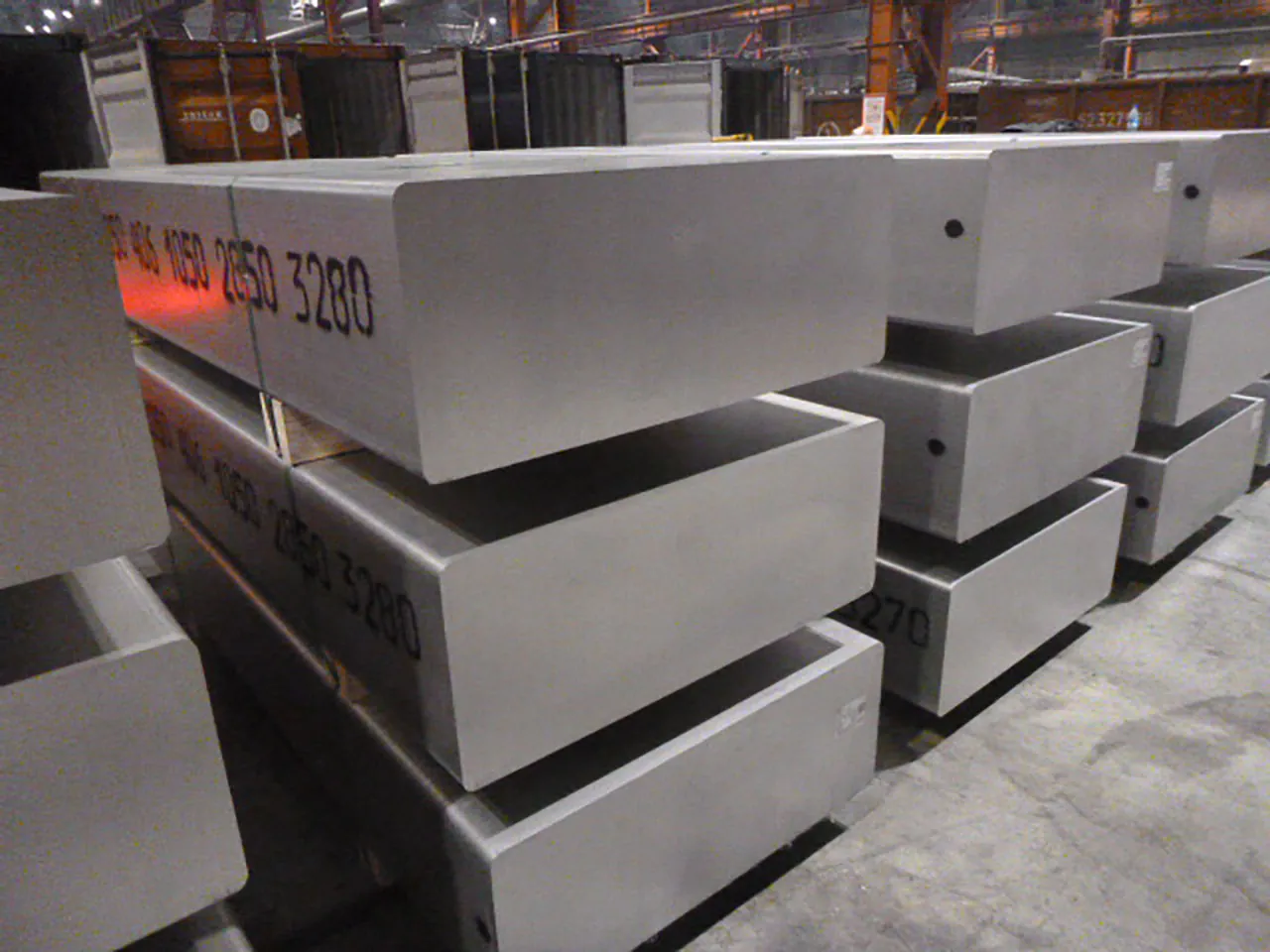
The first digit of an aluminum alloy tells you the main alloying element: 1xxx is 99% or purer aluminum, 3xxx carries manganese, 5xxx carries magnesium and 8xxx carries iron and silicon for foil. Almexa makes 1050, 1100, 3004, 3105, 7072, 8011 and 8079, and is developing 5052 in 2026 with a 36 in maximum width. Heat-treatable alloys (2xxx, 6xxx, structural 7xxx) are outside its scope. Source: Aluminum Association wrought alloy designation system; Almexa 2021 catalog.
Buyers order aluminum by alloy number without always knowing what sits behind it. The number is not a catalog code: it describes the chemistry of the metal, and from that chemistry come strength, ductility, weldability and price.
What each digit says
The Aluminum Association maintains the four-digit system the whole industry uses. The first digit names the main alloying element. The next three identify the specific alloy within the series, and in the 1000 series the last two digits give purity: 1050 is 99.50% aluminum, 1100 is 99.00%.
| Series | Main element | Character | Examples Almexa makes |
|---|---|---|---|
| 1xxx | None (99% or more aluminum) | Very ductile, excellent conductivity and corrosion resistance, low strength | 1050, 1100 |
| 3xxx | Manganese | Medium strength, good formability, the most used general sheet | 3004, 3105 (3003 on request) |
| 5xxx | Magnesium | Higher strength, good in marine environments, structural | 5052 in development (up to 36 in) |
| 7xxx | Zinc | In 7072, sacrificial: protects by galvanic corrosion | 7072 for fin stock |
| 8xxx | Iron and silicon | Rolls to micron gauges without pinholes | 8011, 8079 for foil |
Series a common-alloy mill does not make
The 2xxx (copper), 6xxx (magnesium and silicon) and most 7xxx series are heat-treatable: they gain strength through solution treatment and aging. They are the alloys of aerospace and automotive outer body panels. Almexa makes common, non-heat-treatable alloys, and says so before quoting so nobody waits a week for a 6061 that will never come.
What each element adds
Manganese in the 3000 series raises strength without giving up much formability; that is why 3105 dominates painted sheet and construction, and 3004 dominates cookware bases and cans. Magnesium in the 5000 series raises strength further and improves behavior in salt water; 5052 is the alloy of truck boxes, tanks and structural transport parts. Iron and silicon in the 8000 series allow rolling to 0.00024 in without perforation; 8079 is more ductile and rolls thinner than 8011, which is why it rules pharmaceutical blister.
Temper is the other half of the number
An alloy is ordered with its temper: O is annealed, the softest condition; H12, H14, H16 and H18 are strain-hardened in increasing degrees; H2x are strain-hardened and partially annealed. Two 3105 coils can behave like different materials if one is O and the other H18: the first draws, the second cracks on the same radius. When a bend fails, the first question is not the alloy, it is the temper.
How to choose when you don't know
- Deep-drawn parts (pots, steamers): 1050 or 1100 in O temper.
- Painted and formed parts (profiles, panels, blinds): 3105 in H14 or H16.
- Parts needing rigidity or going on trucks: 5052 in H32 or H34, within available width.
- Heat exchanger fins: 1100 for conductivity or 7072 for cathodic protection.
- Packaging or blister foil: 8011 or 8079 in O.
When doubt remains, the right answer is to send the part, not the alloy. A plant metallurgist looks at it and proposes the alloy and temper combination, which is sometimes cheaper than the one you had written down.
What the number doesn't say
The number doesn't say who melted the metal or with what scrap. Two 1100s from two mills meet the same composition standard and can differ in inclusions, flatness and gauge consistency. That difference shows in the lot's mill test report and on the customer's line, not on the purchase order.
Frequently asked questions
What is the difference between 1100 and 3105 aluminum?
1100 is 99% pure aluminum, very ductile with low strength; it is used for drawing and heat conduction. 3105 carries manganese and some magnesium: stronger and stiffer, it is the usual alloy for painted sheet, construction and formed parts.
What does H14 temper mean in aluminum?
H14 indicates strain hardening to half the maximum achievable hardness (H18). It is an intermediate temper, with good strength and still able to bend on moderate radii.
Does Almexa make 6061 or 6063 aluminum?
No. They are heat-treatable alloys outside the mill's scope. Almexa makes common alloys: 1050, 1100, 3004, 3105, 7072, 8011, 8079 and 5052 in development.

Leads Almexa Aluminio, Mexico's integrated flat-rolled aluminum mill. Writes about alloys, process, pricing and supply for industrial buyers in North America. LinkedIn