
Blog · Alloys
Which aluminum alloy to use for deep drawing pots and pans

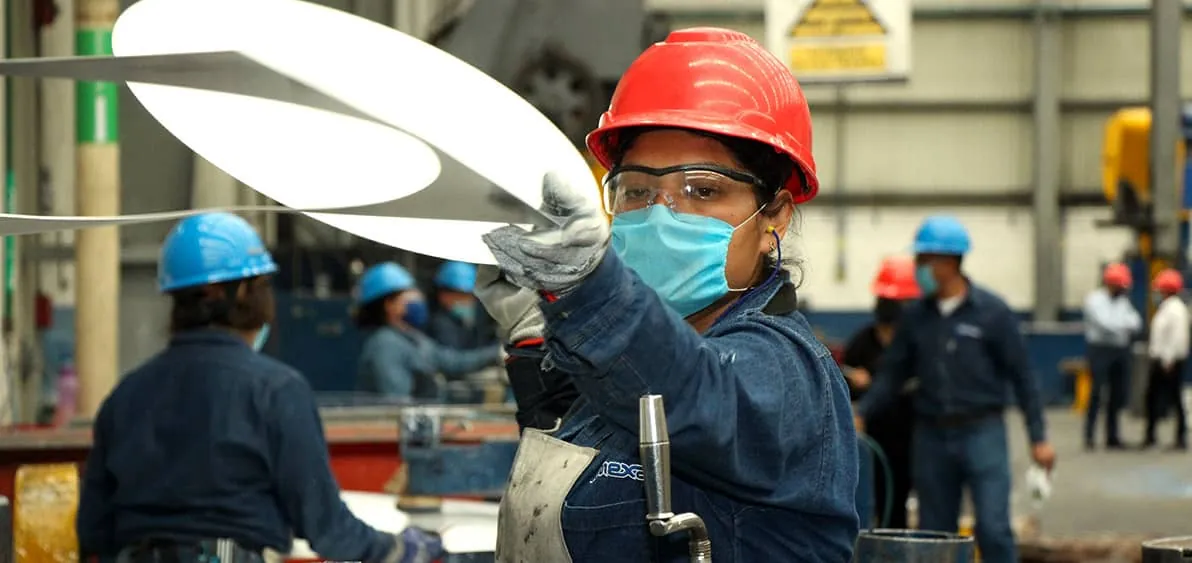
For deep drawing, aluminum 1050 or 1100 in O temper is used, the most ductile condition. When the part needs rigidity, like thick pan bases or large steamers, you move to 3004 or 3105. Thickness runs from 0.06 to 0.157 in depending on diameter and induction base. A part that tears usually has a hard temper or metal with inclusions; a base that warps has insufficient thickness or an alloy too soft. Almexa makes circles from 4.3 to 48 in and 0.018 to 0.157 in. Source: Almexa 2021 catalog; plant practice.
The circle is the product where the metal shows what it carries. On a facade a defect hides; in a deep draw, it doesn't. This guide explains what to order and what to check when something goes wrong.
What deep drawing demands
In drawing, the punch pushes the circle into the die and the metal flows from the walls toward the bottom. The material must stretch a lot without thinning to the point of breaking. That calls for three things: maximum ductility, a fine and uniform grain, and metal clean of inclusions. Ductility comes from alloy and temper; cleanliness comes from the furnace.
Alloy and temper by part
| Part | Alloy | Temper | Typical thickness |
|---|---|---|---|
| Pots and saucepans | 1050 / 1100 | O | 0.06 to 0.118 in |
| Pressure cookers | 1100 / 3004 | O | 0.10 to 0.157 in |
| Pans and griddles | 1100 / 3004 | O / H12 | 0.08 to 0.157 in |
| Steamers and large stockpots | 3004 / 3105 | O | 0.04 to 0.08 in |
| NSF foodservice line | 3004 | O | 0.118 to 0.157 in |
| Lamp bodies | 1050 / 1100 | O | 0.024 to 0.047 in |
Why it tears
- Temper too hard: an H14 where O belonged. Shows as a clean break in the wall.
- Inclusions or oxides in the metal: irregular break from a point. It is a melting defect and the mill test report doesn't show it; the lot does.
- Insufficient lubrication or die radius: break at the bottom corner. Not the material.
Why the base warps
A pan that domes on the stove has insufficient thickness for its diameter, an alloy too soft or residual stress in the circle. Moving from 1100 to 3004 at the same thickness usually solves it without changing the die. With an induction base, minimum thickness rises because the stainless disc is impact bonded.
Finishes
The circle can ship mill finish, pre-painted on the outside, non-stick on the inside or polychromatic. When the finish is applied before drawing, temper and paint have to be chosen together: a baked paint on a badly chosen temper cracks on the radius.
What to send for a quote
- Circle diameter and thickness, or the finished part with its drawing.
- Alloy and temper if you already use them; if not, the end use.
- Finish and whether there is food contact.
- Pieces per month.
With the part in hand, a plant metallurgist proposes alloy, temper and thickness. Sometimes it comes out cheaper than what you had written down.
Frequently asked questions
Which aluminum alloy is used for pots?
1050 or 1100 in O temper for deep drawing; 3004 when the pot needs more rigidity or carries a thick base. Thickness runs from 0.06 to 0.157 in by diameter.
Why does aluminum tear when drawing?
A temper too hard, inclusions in the metal, or insufficient lubrication and die radius. The first two are the material; the third is the process.
Does Almexa supply circles with non-stick applied?
Yes: mill finish, pre-painted, non-stick and polychromatic circles, 4.3 to 48 in in diameter.

Leads Almexa Aluminio, Mexico's integrated flat-rolled aluminum mill. Writes about alloys, process, pricing and supply for industrial buyers in North America. LinkedIn