
Blog · Specification
Aluminum temper designations: O, H14 vs H24, H32 and which to order

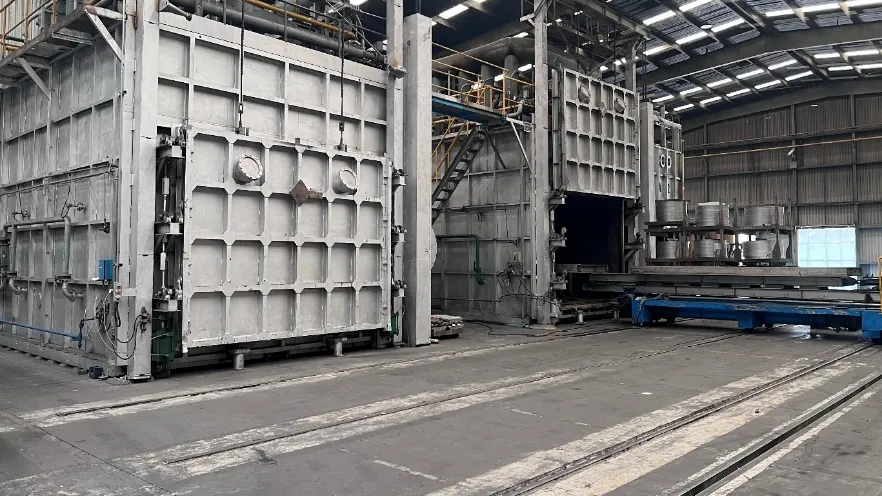
Aluminum temper designations are the letters and digits after the alloy (3003-H14, for example) that state how much the metal was cold worked and whether it was annealed. O is fully annealed and softest; H14 is half hard; H24 matches H14 tensile strength with more elongation; H32 is strain hardened and stabilized. Almexa, in Mexico, makes 1xxx and 3xxx in O, H1X, H2X and H3X, and 5xxx in O and H3X. Source: ASTM B209M-14; EN 485-2; Almexa fact sheet, September 2026.
Two 3003 sheets of the same thickness can behave like different materials: one bends clean, the other cracks at the same radius. The difference is almost always in the letters after the alloy number. This guide explains what each temper means, how the two most confused tempers differ, and how to write the temper on a purchase order so you receive what your process needs.
What an aluminum temper designation tells you
The temper describes the mechanical condition in which the mill ships the metal: how much it was hardened by cold rolling and whether it was annealed afterward. It is written after the alloy with a hyphen, as in 1100-O or 5052-H32, and follows the Aluminum Association designation system (ANSI H35.1).
In the alloys a flat-rolling mill like Almexa produces (1xxx, 3xxx and 5xxx series) the temper does not come from solution heat treatment. It comes from two tools: cold reduction, which hardens the metal, and furnace annealing, which softens it. That is why two coils of the same alloy can have very different strength. The alloy tells you what the metal is made of; the temper tells you how it will behave in your press.
If you want a refresher on the alloy number itself, see what aluminum alloy numbers mean.
The letters: F, O and H
| Designation | Meaning | Typical use |
|---|---|---|
| F | As fabricated, no mechanical property control | Hot band for re-rolling |
| O | Annealed to the softest condition | Deep drawing, spinning, zero-radius bends |
| H1X | Strain hardened only | Formed parts and profiles that need stiffness |
| H2X | Strain hardened, then partially annealed | Same strength as H1X with better bendability |
| H3X | Strain hardened and stabilized at low temperature | 5xxx series, so properties do not drift over time |
| H112 | Some hardening from fabrication, with mechanical limits | Thick plate |
T tempers (6061-T6, for example) belong to heat-treatable 2xxx, 6xxx and 7xxx alloys, which are outside this group.
What the second digit means
The digit after H1, H2 or H3 tells you how hard the metal is relative to the maximum achievable:
- 2: quarter hard (H12, H22, H32).
- 4: half hard (H14, H24, H34).
- 6: three-quarter hard (H16, H26, H36).
- 8: full hard, about 75% cold reduction (H18, H28, H38).
- 9: extra hard, beyond H18.
So H14 reads "strain hardened only, half hard" and H32 reads "strain hardened and stabilized, quarter hard". Source: eFunda temper designation guide, accessed October 2026.
What is the difference between H14 and H24 aluminum?
This is the question buyers ask most and the one behind most claims. Both reach the same tensile strength by different routes: H14 is cold rolled just to half hard; H24 is rolled past that point and then partially annealed back to half hard. The result is that H24 has slightly lower yield strength and higher elongation, so it bends and forms better.
| Property (3003, EN 485-2) | H14 | H24 |
|---|---|---|
| Tensile strength | 145 to 185 MPa (21.0 to 26.8 ksi) | 145 to 185 MPa (21.0 to 26.8 ksi) |
| Minimum yield strength | 125 MPa (18.1 ksi) | 115 MPa (16.7 ksi) |
| Elongation A50 | 2 to 4% | 4 to 6% |
Source: European standard EN 485-2, values for 3003 by thickness.
Under ASTM B209, H14 and H24 may be supplied interchangeably at the supplier's option unless your order specifically excludes one. The same rule applies to H12 and H22, H16 and H26, and H32 and H22. If the supplier ships H2X instead of the H1X you ordered, it must meet the H1X tensile limits (ASTM B209M-14, note D to Table 2). In practice: if your part bends to tight radii, write "H24, H14 not acceptable"; if you need stiffness and flatness, write "H14, H24 not acceptable".
Minimum properties by alloy and temper
| Alloy and temper | Tensile (MPa) | Minimum yield (MPa) | Minimum elongation |
|---|---|---|---|
| 1100-O | 75 to 105 | 25 | 30% |
| 1100-H14 | 110 to 145 | 95 | 5% |
| 3003-O | 95 to 130 | 35 | 25% |
| 3003-H14 | 140 to 180 | 115 | 5% |
| 5052-O | 170 to 215 | 65 | 19% |
| 5052-H32 | 215 to 265 | 160 | 7% |
Source: ASTM B209M-14, Table 2, for thicknesses from 1.20 to 3.20 mm (0.047 to 0.126 in). These are specification minimums, not typical values: the actual values for your lot are on the mill test certificate.
The pattern is clear: going from O to H14 nearly doubles strength and removes more than three quarters of the elongation. That is why a wrong temper shows up the first time the die closes.
How to choose the temper for your part
- Deep drawing and spinning of pots and pans: 1050 or 1100 in O temper, maximum ductility. More detail in our deep drawing guide on the blog.
- Roll-formed profiles and parts with tight bend radii: 3003 or 3105 in H14, or H24 if the bend is demanding.
- Large flat panels with controlled flatness: 3105 in H16.
- Structural parts that need strength: 5052 in H32.
- Re-rolling at another plant: hot band in F temper, which the re-roller finishes to its own gauge.
If you are unsure, send the end use or the part: the temper can be proposed from the most severe operation (bending, drawing or stretching).
Common mistakes when ordering a temper
- Ordering "3003 aluminum" with no temper: the supplier chooses, and H14 is the most common result.
- Ordering "hard" or "soft": there is no way to check that on a certificate. Write the designation.
- Not excluding the H14 and H24 swap when your process is sensitive to elongation.
- Calling the temper a "heat treatment": in 1xxx, 3xxx and 5xxx alloys the temper comes from cold rolling and annealing.
- Receiving material without checking the certificate: tensile, yield and elongation must fall within the standard for the ordered temper.
Tempers Almexa produces
| Group | Alloys | Tempers | Maximum width |
|---|---|---|---|
| 1xxx and 3xxx series | 1050, 1100, 1350, 3003, 3004, 3104, 3105 | O, H1X, H2X, H3X | 48 in (1,219 mm) |
| 5xxx series | 5005, 5052, 5754 | O and H3X | 36 in (914 mm) |
| Hot band | 1xxx, 3xxx and 5xxx series | F, about 0.31 in (8 mm) | 780 to 1,250 mm |
Source: Almexa fact sheet, September 2026. Tolerances and properties per the Aluminum Association.
Almexa casts, rolls and anneals at its plant in Cuautitlán Izcalli, State of Mexico, with four annealing furnaces. Every lot of aluminum coil, sheet, circles, blanks or strip ships with a certificate of analysis that includes chemical composition, mechanical properties and temper, so you can check what you receive against what you ordered.
Request a quote with the full specification
To quote, send alloy, temper (or the next operation), thickness, width or diameter, and monthly volume. If your process does not accept the H14 and H24 swap, say so in the request. Request your quote directly from the mill and a sales engineer will confirm temper, tolerances and delivery date.
Frequently asked questions
What does H14 mean in aluminum?
That the metal is strain hardened only, to half hard. For 3003, ASTM B209M-14 requires 140 to 180 MPa tensile and at least 115 MPa yield for thicknesses from 1.20 to 3.20 mm.
Is H14 aluminum the same as H24?
They have the same tensile strength, but H24 is partially annealed and has more elongation: for 3003, 4 to 6% versus 2 to 4% for H14 under EN 485-2. Under ASTM B209 the supplier may ship one for the other unless the order excludes it.
Which aluminum temper bends without cracking?
O temper, fully annealed, is the most ductile and allows zero-radius bends. If you need some stiffness, H24 bends better than H14 at the same strength.
Which tempers does Almexa produce?
1xxx and 3xxx series in O, H1X, H2X and H3X up to 48 in wide; 5xxx series in O and H3X up to 36 in; and hot band in F temper, about 0.31 in (8 mm). Every lot ships with a certificate of analysis showing the temper.

Leads Almexa Aluminio, Mexico's integrated flat-rolled aluminum mill. Writes about alloys, process, pricing and supply for industrial buyers in North America. LinkedIn